

For many families, free school meals are crucial, providing a daily nourishing meal for the child and relieving a portion of the parents’ financial strain.
In Leeds, 19,371 pupils qualified for free school meals in 2015-16, now it is over 35,000.
Although eligibility has risen, there are still around 900,000 children in England in low-income families who do not get free school meals.
Jo Green, director of communications and co-founder of the centre for Young Minds, said: “Schools have been under a lot of pressure for the last few years and they shouldn’t have to do it on their own, so it’s really important that the government supports schools to alleviate some of the drivers of poverty.
Some children who are actually living in poverty are not eligible for free school meals so they (the government) could expand free school meals to all children who’s families receive universal credit for example.”
The cost of living crisis has driven more families to qualify.
Poverty has a direct impact on children’s education, they are less likely to do well in school, less likely to leave with good qualifications and are more likely to leave without the basic qualifications that you need to go on to university, further education or to get an apprenticeship.
It can also lead to a range of health issues, with poorer children more likely to have problems with obesity due to a poor diet, as well as being more likely to struggle with concentration at school, have behavioural problems and are more likely to start school having not met a lot of the development goals, making life harder when they start their school career.
At Hovingham Primary in Harehills, one of the most deprived areas of Leeds, 41% of pupils rely on free school meals for a nutritious school meal as their only guaranteed healthy food source.
Sammy Cook, a single parent from Harehills, describes the impact of free school meals on her family: “My son qualifies as we receive universal credit, and it’s such a relief knowing he gets a good meal everyday without having to worry about the cost of it. It’s one less thing to think about, and it really helps us focus on other aspects of his education and his well-being”.
For families like the Cooks, free school meals provides stability, reduces financial strain and supports children’s ability to do well in school, but with thousands of children still not receiving the support they need, the system must improve.
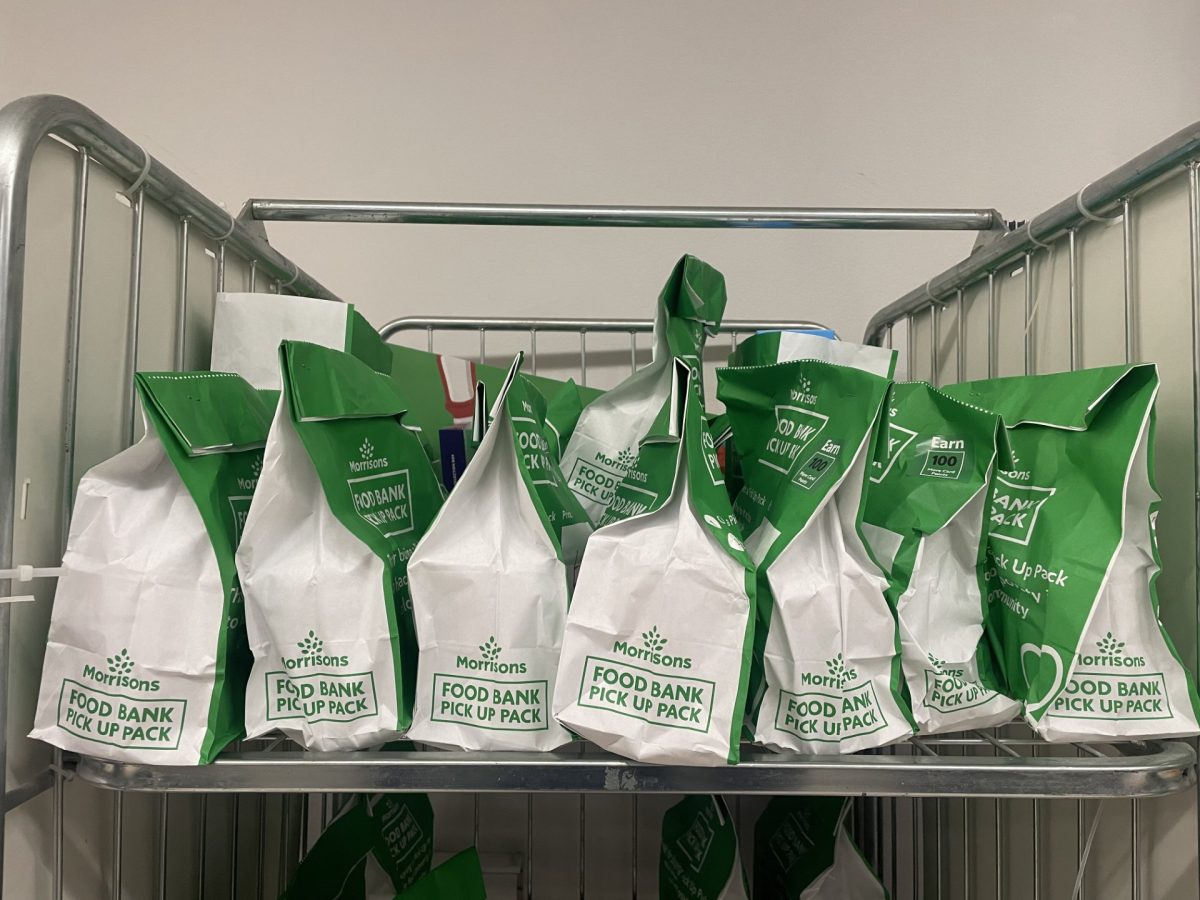
Leeds South and East Foodbank distributed over 8,500 emergency food parcels between March and September 2023, a 16% increase from the previous year, with over 3,300 of those parcels going to children.
 Source: Janie Barawitzka
This stresses the scale of food insecurity and the growing dependency on local support systems, although, food is not the only educational cost parents worry about.
Hidden costs of education, such as uniforms, exacerbate inequality, Green explained that, “School uniforms are quite prohibited for some very low-income families, a lot of that is driven by having school logos on uniform. You could buy a jumper in Asda for £4 but with a logo on it could be 5 times that, so there’s quite a big case for cutting down on the number of logos that schools have on their uniforms.”
The rise in free school meal eligibility reflects the growing cost of living crisis, but many children still miss out on vital support. Expanding free school meals to all families on universal credit and tackling extra costs such as school uniforms are vital for supporting children and ensuring they have the opportunity to succeed.