
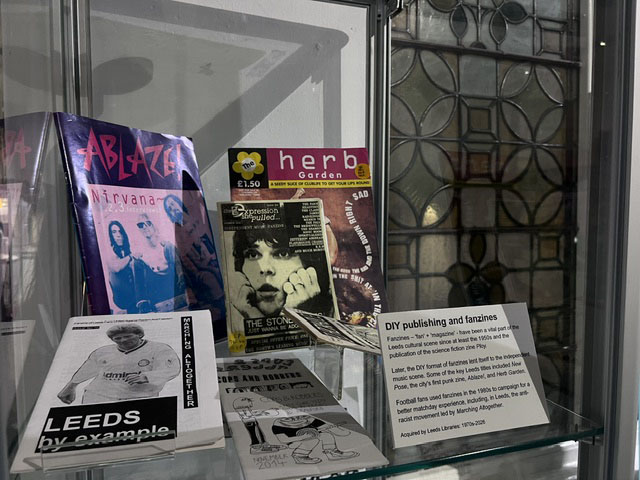

Fanzines are a really brilliant source of social history from the eras they were written in, reflecting societal values and recording events, products and businesses that were active at the time. Fanzines record society at the time of publication and it allows us to keep record of the city’s history.
Self publishing has always played a key role in print, without the 1970s music and football fanzines lots of media would have been very different. These specific fanzines were the social media of the 70s and represented Leeds as a city but also shaped it.
Leeds Library are doing a deep dive into the history of self publishing in the city at their talk Leeds, Play, Publish, Progress. Pete Slater, the host of the event, has done research into football fanzines in particular which was inspired by the Voice of the Fans exhibition held at Leeds City Library last year. Pete has since done further, into all manner of localised DIY printing and publishing.
Pete said: “Fanzines gave a voice to people without one, early adopters of Sci-Fi, music fans fed up with stuffy reviews in mainstream press and football fans who’s fans were not being heard and certainly not listened to by the police, the press, the clubs or the authorities.”
Fanzines helped bring sci-fi into the mainstream and also: “allowed bands that weren’t mainstream to gain publicity and in football they brought together disparate club communities around the country to unite in the eradication of racism, fight ID cards and the Thatcher government. It helps clubs to understand that fans no longer put up with prehistoric facilities. They also changed the face of the print in the media in the UK forever, many famous names of the media in the past 50 years, Danny Baker, Steve Lamacq, Irvine Welsh, James Brown for example who all started in fanzines.”
Antony Ramm, Senior Librarian and Manager of the Heritage and Research department at Leeds central library said that the reason for the talk was: “To learn more about their local history and heritage and to engage with local history materials held at the library (all our events ultimately relate to our collections). To also feel part of a community of likeminded people but also to be able to place themselves into the city’s historical lineage.”